
FreeCell vs Klondike: which Solitaire should you play?
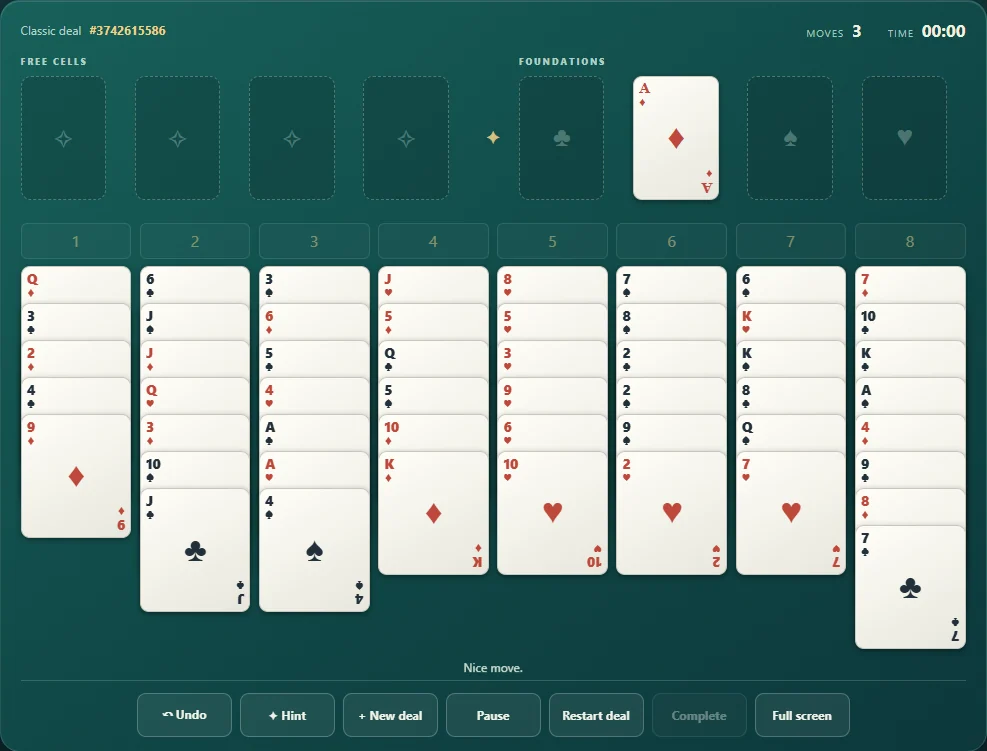
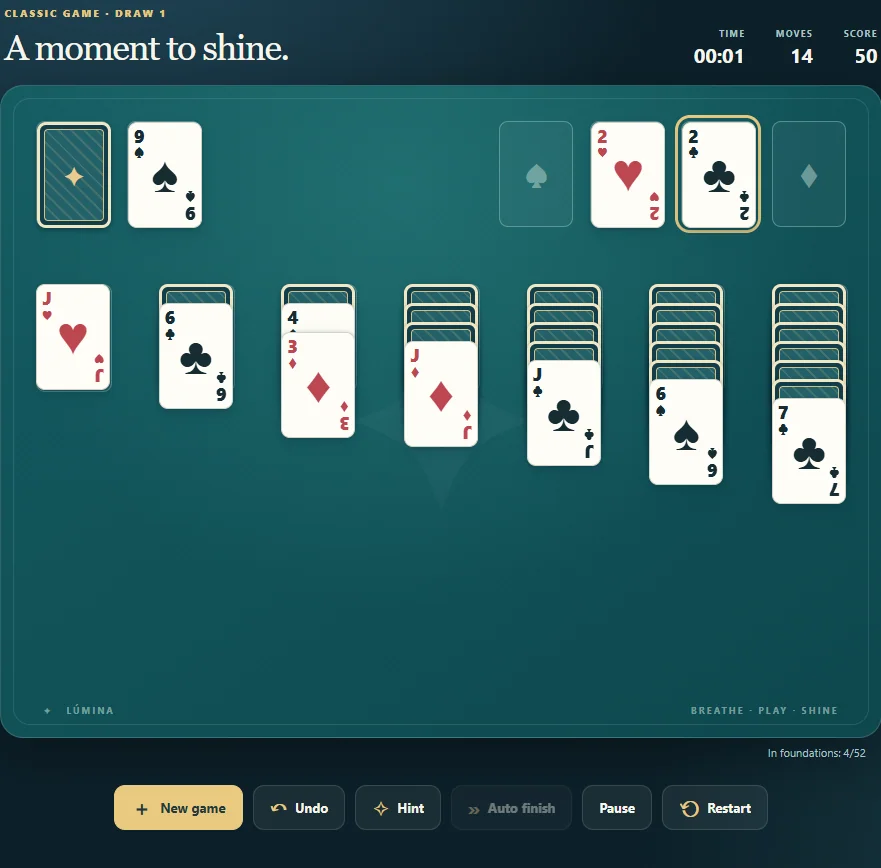
FreeCell and Klondike share tableau columns, suits and foundations, yet they create different decisions. FreeCell shows all 52 cards and gives you four temporary cells; Lúmina Solitaire asks you to uncover hidden cards and decide how to use the stock.
Visible information changes the puzzle
FreeCell deals every card face up. You can plan far ahead, but every occupied free cell removes temporary room for a later move. Its challenge is managing workspace without locking a card you still need.
Lúmina Solitaire uses the Klondike pattern of face-down tableau cards and a stock. A strong move often exposes a hidden card even when it does not immediately advance a foundation. That makes the game more about discovery and adapting your plan.
What the two variants share
Both games build suit foundations from Ace to King and build tableau columns down in alternating colours. That shared grammar makes them familiar, but it does not make their strategies interchangeable.
FreeCell has four single-card holding spaces and can turn an empty column into working room. Klondike's stock and hidden cards decide which future moves can exist. Treat the two sources of flexibility differently.
Choose by the kind of decision you enjoy
Pick FreeCell when you want the entire position available for deliberate planning. A free cell can change a whole sequence, so it suits players who enjoy tracing several moves before committing.
Pick Lúmina Solitaire when revealing the board is part of the pleasure. Its draw options and daily challenge create a different pace without asking you to map the whole deck at the opening move.
Useful opening habits
In FreeCell, do not fill all four cells merely because you can. Keep an exit available and favour moves that free Aces or low cards without closing a necessary sequence. Check which column will open before using a cell as a quick fix.
In Klondike, look for moves that uncover face-down cards and check which colour each column needs next. Do not automatically move every card to a foundation if it still helps organize the tableau. Undo lets you compare a real decision without losing the local game state.
Play both published versions
The two game pages list their current controls, builds and daily challenges. FreeCell gives you the four cells and full information; Lúmina follows Klondike rules with its own draw options. Open either page to play in the browser.
Spider adds longer suit sequences, while Pyramid changes the goal to pairs that total 13. There is no universal best Solitaire: choose the rule set you want to solve next.
Keep playing
Every game page lists its current version and controls and offers a fullscreen play view.
Explore the collection: Solitaire Games