
Spider vs Scorpion Solitaire: packets, destinations and stock
Both games build same-suit King-to-Ace runs, yet their movement permissions work in different directions. A packet can travel freely in Scorpion but face a strict landing rule; Spider makes the packet stricter and its destination more flexible. Compare the published browser editions before carrying a habit across.
First ask whether the packet can move
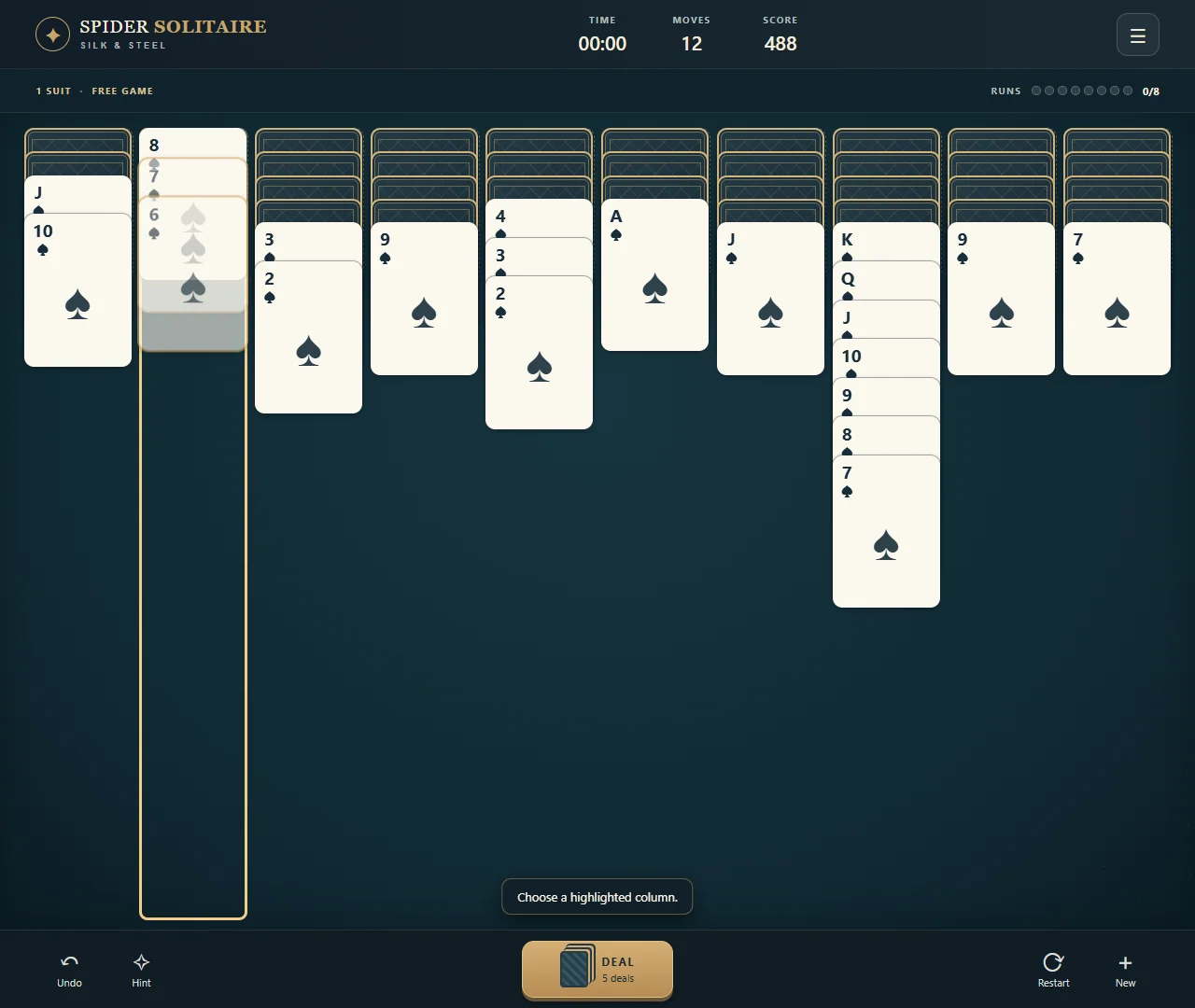
Spider lets a multi-card packet travel when it is descending in the same suit. A heart eight with a spade seven below it is not one movable packet, even though creating that stack can be legal. Separating suits is therefore a practical part of preparing later moves.
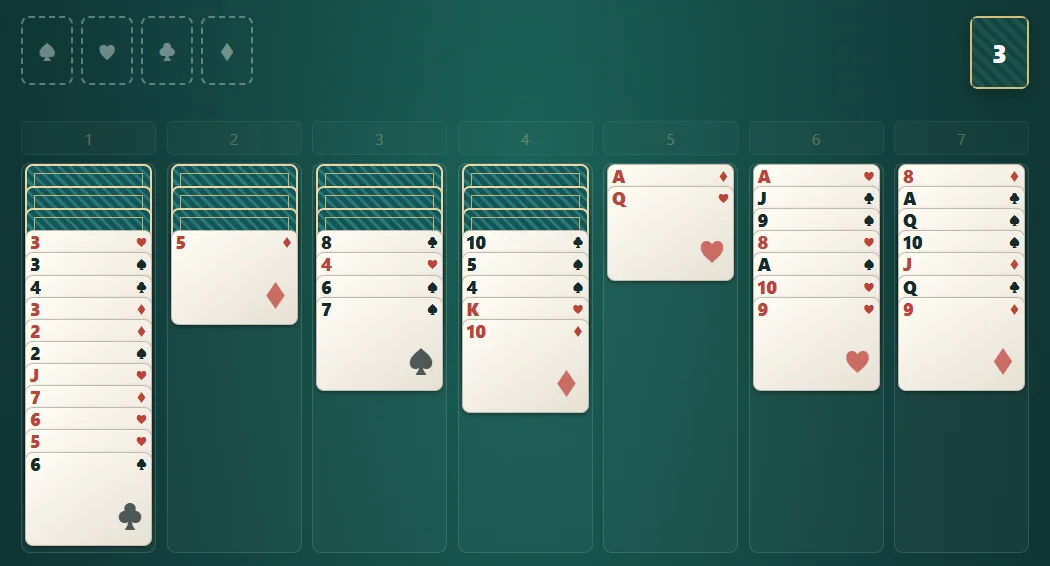
Scorpion permits selecting any face-up card together with everything below it, regardless of internal order. That can uncover a hidden card without first sorting the whole packet. The selected top card still needs a legal destination.
Then check the landing card
In Spider, the landing card must be one rank higher, but its suit can differ. A heart-seven packet may land on a spade eight. You may need to separate that join later before it can become part of a longer transferable same-suit run.
Scorpion requires both the next higher rank and matching suit: the heart seven needs a heart eight. A loose packet is only useful if its leading card fits somewhere. Inspect which landing places a move will expose or consume rather than treating packet freedom as unlimited placement.
Empty space and stock have different jobs
A Spider empty column accepts any valid card or packet, not just a King. Another stock row cannot be dealt while a column is empty. This edition uses 104 cards across ten columns, with fifty cards reserved for five deals of ten.
Scorpion uses 52 cards and seven columns. Only a King-led packet can fill an empty column, and the three-card reserve is dealt once onto the first three columns. There is no sequence of full-tableau stock rows to postpone a blocked position.
Choose the kind of reorganisation you enjoy
Spider offers one, two or four suits while retaining its movement rules and eight completed runs as the goal. Suit variety changes how packets can be assembled; it does not make a mixed packet movable. Completed same-suit King-to-Ace runs leave the tableau in this edition.
Scorpion needs four completed runs, which this edition also removes. Choose it for unsorted packet moves with strict destinations; choose Spider for ordered packet planning with more columns and several deals. No universal win rate or difficulty ranking is established here. The individual guides explain the full rules, and the game pages open each playable version.
Keep playing
Every game page lists its current version and controls and offers a fullscreen play view.
Explore the collection: Solitaire Games