
Scorpion Solitaire vs Yukon: what changes when cards move
Scorpion and Yukon share an unusual freedom: a face-up card can carry every card below it even when the packet is unordered. The important difference is where that packet may land.
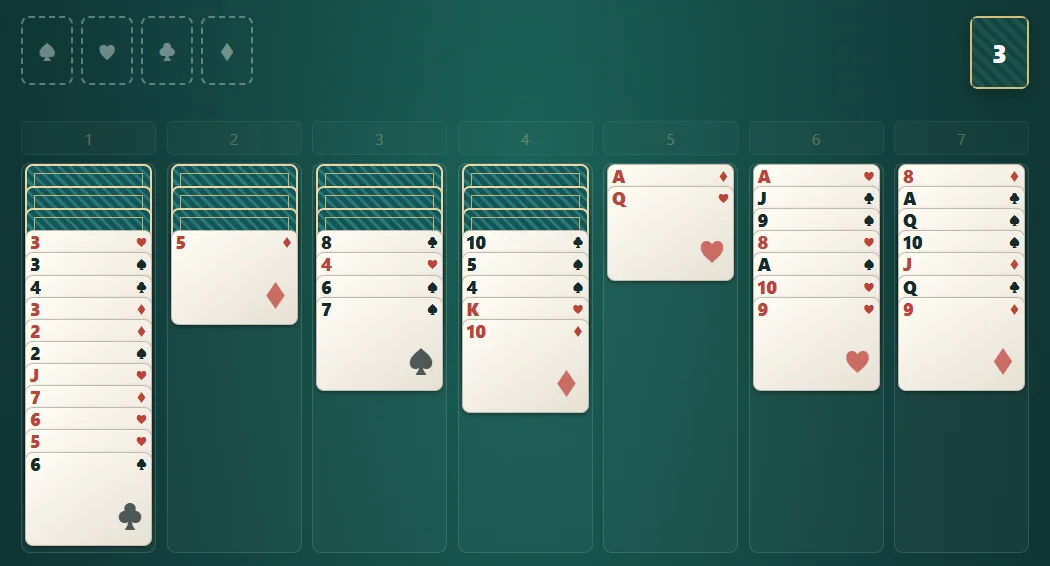
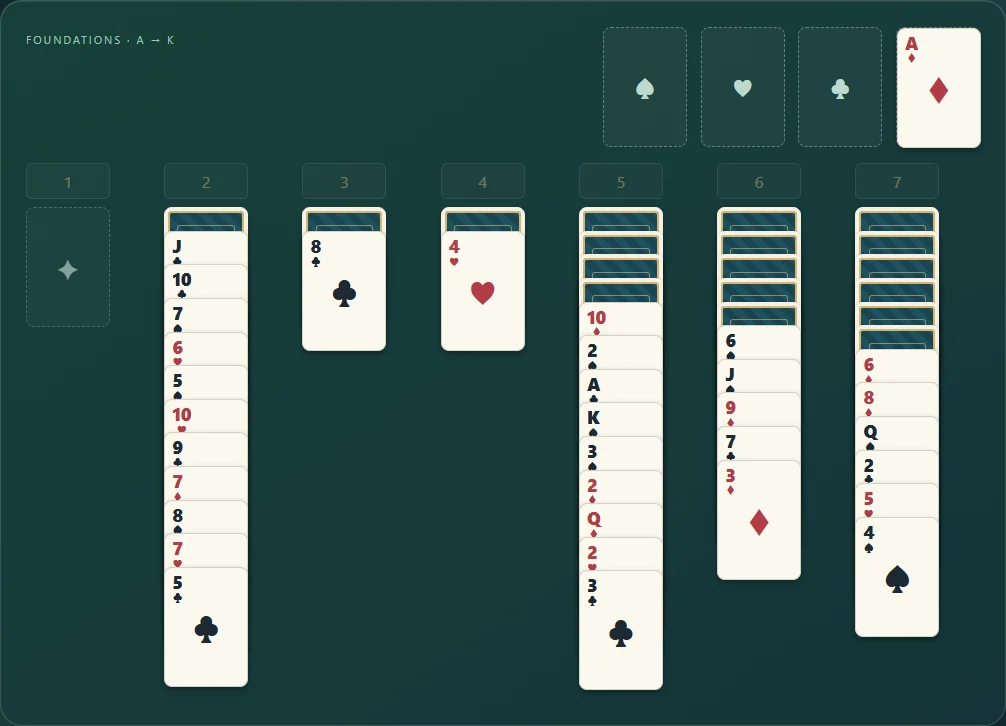
What they share: moving unordered packets
In both variants you can select a face-up card and move it with every card beneath it, even when those cards do not form an ordered run. The move is most useful when it reveals a face-down card or clears a route through the tableau.
Both published builds include undo, hints, a daily challenge and local saves. Those helpers do not make the games identical: the legal destination for a packet still determines the problem you are solving.
The difference: suit building in Scorpion, colours in Yukon
In Scorpion, a packet lands on the next higher card of the same suit. The goal is four complete King-to-Ace suit runs in the tableau. Empty spaces take only a King, and the three-card reserve is dealt once.
In Yukon, foundations build Ace to King by suit while tableau columns build down in alternating colours. There is no stock: all 52 cards are dealt at the start. An empty column is also for a King, yet alternating colours create different destinations from Scorpion's same-suit runs.
Which one to choose
Choose Scorpion when you want to manage same-suit runs and decide when a one-time reserve is worth dealing. It rewards preserving a useful King and noticing which hidden card a packet will reveal.
Choose Yukon when you prefer every card to be present from the opening without a reserve. Its alternating colours and foundations make the central question how to expose cards and clear columns, rather than how to complete a suit run in place. Open either game page to play its current published version.
Keep playing
Every game page lists its current version and controls and offers a fullscreen play view.
Explore the collection: Solitaire Games