
Minigolf practice: separate aim, power and bank shots
Practising a putting game works better when a missed shot answers a question. Zarocer Minigolf lets you pick an individual hole, so you can compare a controlled change instead of repeating a full round every time you want to test your aim.
Use practice to remove variables
Choose Practice, then hole 1. Its open layout helps you study distance and direction without a wall, sand patch or water hazard changing the shot. Start by identifying the ball, cup and aiming guide. A hole-in-one is not necessary to learn whether you understand the controls.
Drag back and release to putt, or use Direction and Power before choosing Putt. Separate controls make repeated values easier to compare. Focus the course for keyboard input: Left and Right adjust direction, Up and Down adjust power, Space or Enter putts, and Escape pauses.
Try a repeatable power comparison
Begin two separate attempts from hole 1's starting position. Aim right both times, use power 25 in the first attempt and 35 in the second, and restart the practice hole between them. In this edition both shots stop short of the cup, while the second travels farther. This demonstrates a difference; it is not a guaranteed winning power setting.
Next keep power unchanged and compare a small adjustment to aim. Watch which side of your intended line the ball reaches. Changing power and direction together makes the outcome harder to interpret. Let the ball stop before judging the result or taking another shot.
A fast arrival can still miss the cup
The simulation checks both distance from the cup and ball speed before sinking the putt. Passing close at high speed is not enough. When your line looks right but the ball runs past, try less power from the same starting situation rather than assuming you must aim somewhere else.
Do not turn your first-hole observations into a universal distance chart. Bank shots and sand change what happens along the route. A shorter shot leaving an easy next putt may be a useful choice when an ambitious direct route crosses a hazard you cannot yet control.
Sand, stone and water call for different checks
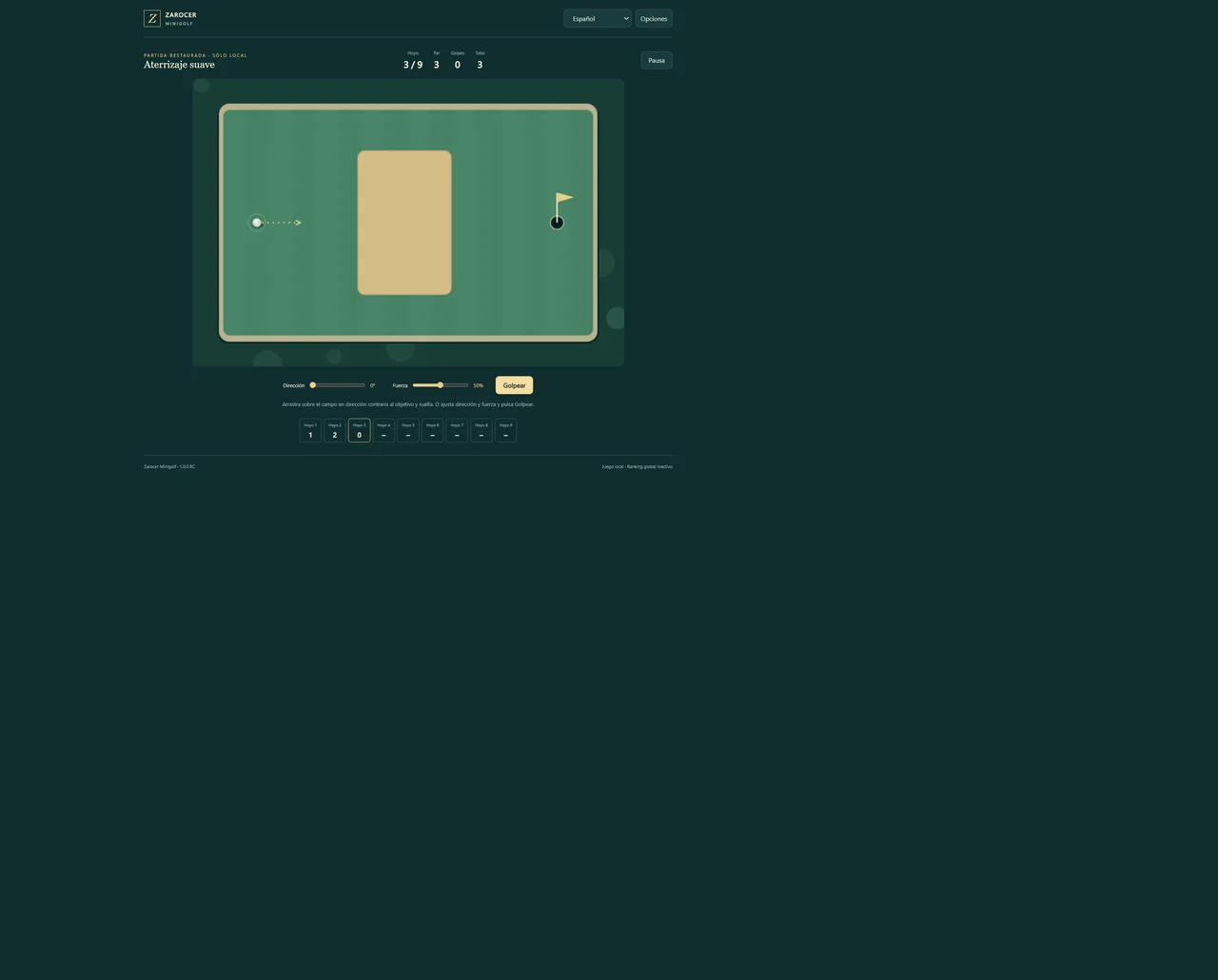
Hole 3 introduces sand, which slows the ball more strongly than the ordinary surface. Compare a route through it with one around it. Walls and stone bumpers change direction on contact, so a planned rebound must include the position you expect after the collision.
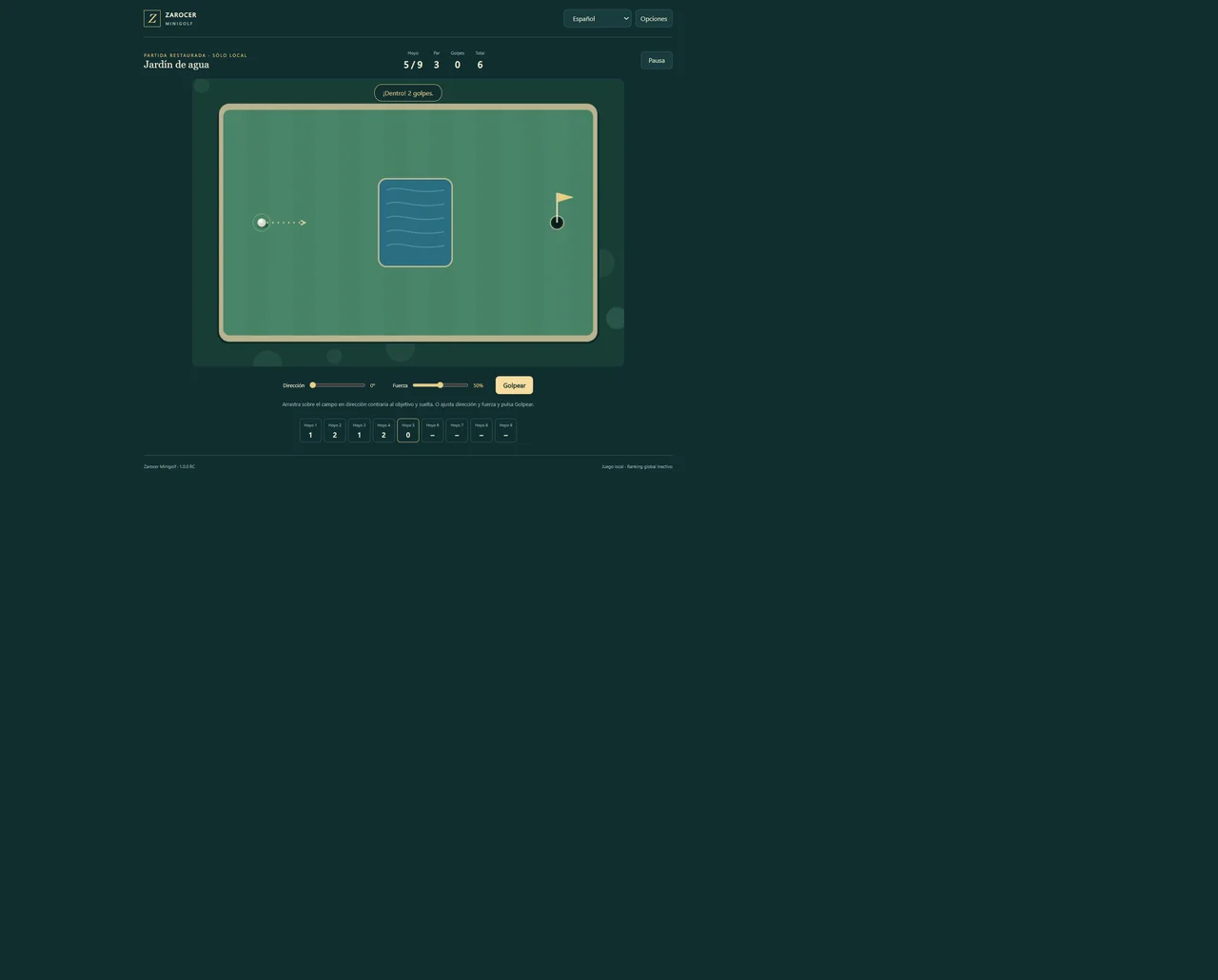
Water appears on hole 5. Entering it adds a penalty stroke and returns the ball to the position of your previous shot. It does not take a life or always reset the whole hole. An unfinished hole reaches its attempt limit at twelve strokes. Check this edition's rules before borrowing a tip from another browser game.
Transfer the lesson to a full round
The Garden Cup uses nine fixed holes with a combined par of 29. Finishing one practice hole is a different achievement from completing that card. Before starting a cup, choose a plan for the early wall, sand and water holes; you do not need to master every possible rebound first.
Saves and personal records belong to the browser on this device. Portal sign-in does not by itself turn them into a global leaderboard or synchronise the game's local state. The global ranking is inactive. Use the game page to open the current build, and the Sports collection when you want to choose a different discipline.
Keep playing
Every game page lists its current version and controls and offers a fullscreen play view.
Explore the collection: Sports Games